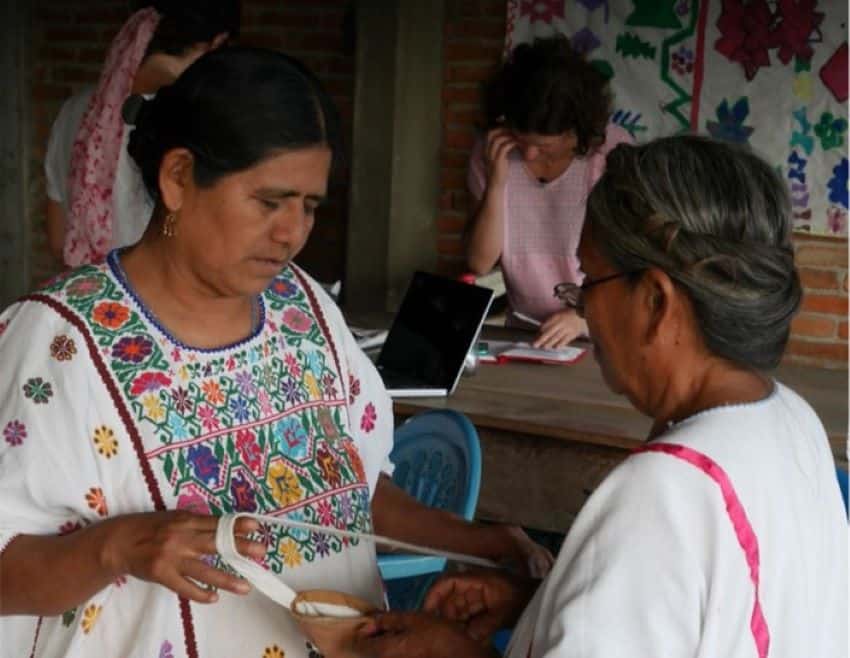
Eme Eidson’s first documentary, “El Barrio,” which looks at life in Mexico City’s Tepito neighborhood, won Best Documentary and the Founder’s Choice Award at the New York International Independent Film & Video Festival and Best Documentary at the Los Angeles Film Festival. Her documentary about women weavers in Chiapas pulling their families and communities out of poverty with micro-credit loans, “No Son Invisibles: Maya Women and Microfinance,” featured Nobel Prize Winner Muhammad Yunus of Grameen Bank. It was screened at the Cannes, Torino, Roma, Guadalajara, Tehran, Seattle Latino, Del Rey Beach and Dubai film festivals and was nominated for an Academy Award by the Washington DC Human Rights Festival.
Eidson’s newest inspiring documentary, “Slow Fashion,” takes on cultural appropriation and sustainability in the fashion industry. It was filmed in Oaxaca, India, and Laos.
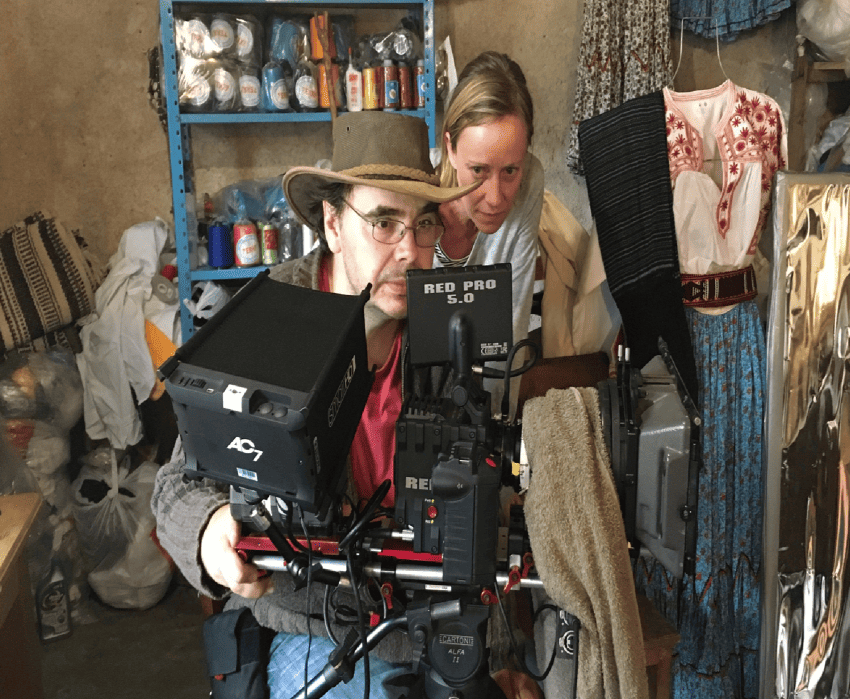
The film opens with a notorious 2015 incident that sparked widespread outrage in Mexico, when French designer Isabel Marant came under fire for plagiarizing a traditional embroidered huipil design created by Mixe weavers from Santa Maria Tlahuitoltepec, Oaxaca. Then another French fashion company, Antik Batik, brazenly sued Marant for copyright infringement over that design and similar pieces. In December 2015, a French court provided a small measure of justice by ruling that neither Marant nor Antik Batik could copyright huipil designs as they are a cultural artifact of the Mixe people. After the court ruling, protests outside her New York store, and social media shaming, Marant apologized and stopped selling the blouse. She provided no compensation to the Mixe community, however.
“Isabel Marant has yet to give a percentage of her profits to the weavers in compensation for the use of their designs. The women still get nothing,” Eidson noted. “She repeatedly takes traditional designs from various parts of Mexico, changes them slightly, and then sells them in her stores in Europe and the U.S. for US$400 or more. Meanwhile, the traditional, handmade designs from the Mixe women weavers in Tlahuitoltepec sell for only 400 pesos (US$22) in Oaxacan markets.”
“She doesn’t hire the Mexican women to sew these designs by hand,” Eidson continued. “To make matters worse, knockoffs machine-made in China then end up in Mexico, in the Indigenous women’s own markets, selling for much less. These women have to compete with cheap Chinese knockoffs of their own designs. Their designs travel all the way around the world in a way that brings them no benefit and harms them economically.”
Isabel Marant was back in the news in 2020 when Mexico’s Minister of Culture, Alejandra Frausto Guerrero, accused her of “borrowing” yet another design from the Purépecha people of Michoacan. “This practice is not only unethical but immoral,” Eidson asserted. “These talented women often don’t have running water or electricity, and you’re going to steal from them? The designs are like gold; without them, the shirt loses almost all of its value. Designers such as Marant are making a fortune from these precious historical designs that don’t belong to them.”
The 2015 incident motivated Oaxaca’s congress to declare the Mixe community’s traditional designs and language as Intangible Cultural Heritage per UNESCO guidelines. This decision to recognize Mixe embroidery as a cultural heritage is an important symbolic step, but unfortunately, it is not legally binding. The weavers can only hope it will be enough to deter more theft of their designs. An internationally recognized industry standard with legal teeth is needed, argues Eidson.
Several other high-end designers stand accused of similar practices. In October 2022 the American luxury brand Ralph Lauren apologized after Beatriz Gutiérrez, wife of President López Obrador, pointed out the company’s appropriation of Contla and Saltillo designs. Mexico has also lodged complaints against leading “fast fashion” brands like Zara, Anthropologie, Shein and Mango.
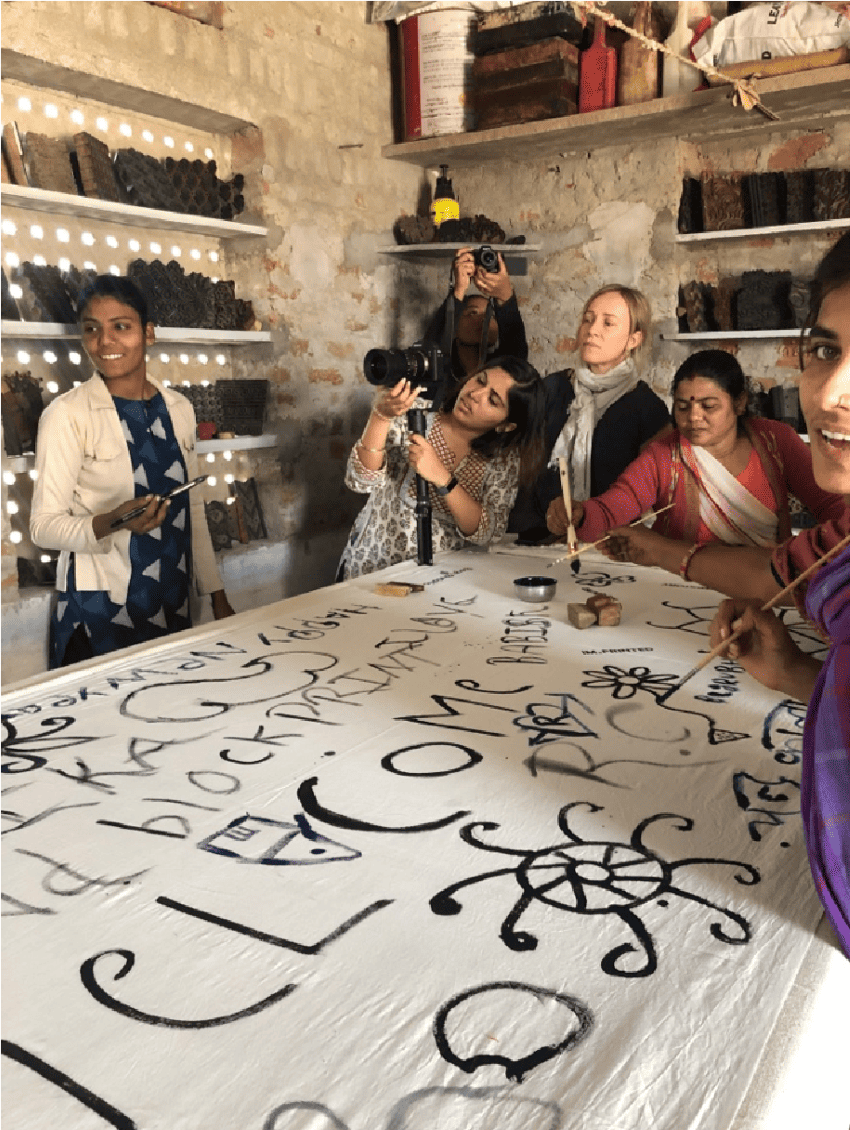
After illustrating the extent of the exploitation, Eidson provides examples of what can be accomplished by responsible, inclusive, and sustainable actors in the fashion industry. The documentary moves from Mexico to Laos, where we meet Nancy Takayama, a professor and sustainable fashion activist who works with communities of Laotian artisans and weavers. She explores socially conscious ways of collaborating, believing that designers should not just take the artisans’ heritage—their designs—but provide something concrete in return, such as royalties.
In Jaipur, India, we are introduced to Mireia Lopez, a progressive New York City eco-designer who demonstrates how to respect artisans by working in a just and fair manner. “She’s like a warrior,” said Eidson, “for social justice and environmental sustainability.”
Eidson makes a compelling case that it is possible and necessary to give credit and compensation to the Indigenous communities whose designs provide such clear “inspiration” to fashion designers. Given the vast economic disparity between local communities of origin and the global companies who are appropriating their designs, she argues, it becomes a matter of not only collective intellectual property rights but also human rights.
Eidson is delighted by the positive reception that Slow Fashion has received. After it premiered at the International Human Rights Festival: This Human World in Vienna, Austria, last December, European schools widely distributed it. It was also screened at The Manhattan Film Festival last June and was subsequently acquired by Docsville and NYC’s Filmmakers’ Cooperative. In addition, it has won a number of awards: Impact Doc Awards’ Award of Merit for Contemporary Issues/Awareness Raising, Accolade Global Film Competition’s Award of Recognition for Liberation/Social Justice/Protest/Contemporary Issues/Awareness Raising, and the Green Academy’s Achievement award.
“To change the consciousness about cultural designs in fashion—that’s the impact I’d like the film to have,” said Eidson.
Eidson’s next project, entitled “The Great Metamorphosis,” is a series of short documentary films focused on leaders of environmental projects worldwide. “I am drawn to people who are tackling the global existential crisis of climate change,” Eidson explained. “The idea is to create a moving web that connects environmentally conscious leaders and their followers on social media, thereby regenerating the earth’s systems and transforming people’s behavior in order to avoid catastrophe.”
The best way to watch Slow Fashion is at www.docsville.com. Learn more about the movie and the issues it raises at www.slowfashionfilm.com. Eidson also invites you to share your thoughts with the filmmaker at https://www.slowfashionfilm.com/contact, and you can follow her on Instagram: eme3studio or Facebook: Eme Eidson.
Based in San Miguel de Allende, Ann Marie Jackson is a writer and NGO leader who previously worked for the U.S. Department of State. Her novel “The Broken Hummingbird” will be out in October. Ann Marie can be reached through her website, annmariejacksonauthor.com.